
 EN
EN
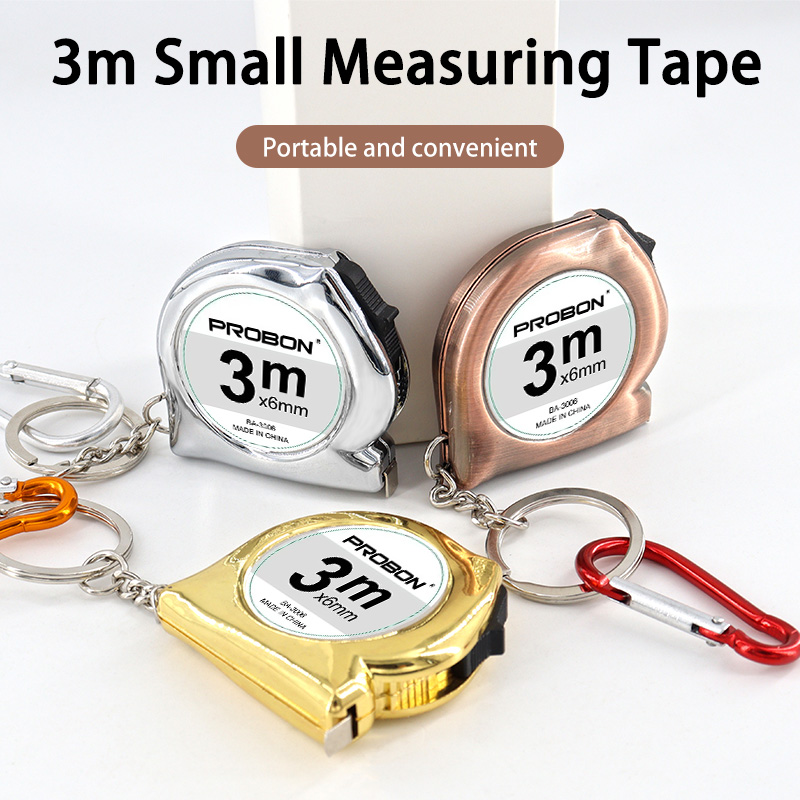
Understanding Tape Measure Accuracy and Industry Standards
What Defines Accuracy in a Retractable Tape Measure?
Getting accurate measurements from a tape requires attention to three main factors: keeping the blade straight, making sure the hook stays put, and checking calibration regularly. Most pro builders need their tapes to stay within about 1/32 inch for every 10 feet measured according to industry standards set by ISO. Temperature changes matter too since steel expands when it gets warmer. We're talking about roughly 0.06% expansion if there's a 30 degree Fahrenheit swing, which adds up outside where temps fluctuate all day long (source: ASTM 2023 research). Hook problems happen when people don't handle the tape right, especially that slinging motion everyone does instinctively. This can throw off readings by as much as 1/16 inch sometimes. The good news? Regular checks with proper equipment cut down these mistakes by around 80 percent according to tests done at over 100 different job sites throughout the country last year.
The Role of Standardized Accuracy Classes in Tape Measures
Manufacturers classify tape measures into three accuracy tiers based on permissible deviation:
| Class | Tolerance (10 ft) | Best For | Compliance Standard |
|---|---|---|---|
| I | ±1/32" | High-precision layouts | ISO 9504:2022 |
| II | ±1/16" | General construction | EN ISO 9001:2015 |
| III | ±1/8" | Rough measurements | ANSI B11.19-2019 |
Class I tapes are standard in commercial projects where cumulative errors could misalign structural components. According to the Construction Metrics Institute (2022), Class II tools suffice for 94% of residential builds, while Class III remains common in landscaping and material estimation due to lower precision demands.
ISO Standards and Tolerance Levels for Construction-Grade Tape Measures
ISO 9504:2022 sets a maximum permissible error of ±0.3 mm per meter for Class I tapes under lab conditions, expanding to ±1.2 mm/m in real-world settings due to environmental factors—critical for foundation work. Compliance testing includes:
- 50,000 extension/retraction cycles
- Thermal stress from -4°F to 122°F
- Bend resistance up to 15 lbs at three points
Recent ASTM research (2023) attributes 68% of jobsite errors to non-compliant tapes used in specialized tasks like HVAC installation. Industry best practices now recommend calibrating tapes every 3–6 months, a routine shown to reduce material waste by $18,500 annually in mid-sized firms.
Class I, II, and III Tape Measures: Performance and Practical Applications
Key Differences Between Class I, II, and III Tape Measures
The accuracy classes basically tell us how much measurement error is allowed. For instance, Class I instruments can be off by about plus or minus 1.1mm across 10 meters, whereas Class II has a bigger margin at around 2.3mm, and Class III goes all the way to 4.6mm. Why such big differences? Well, it comes down to what goes into making them. Top tier Class I measuring devices typically use premium steel with those super accurate laser etched markings, but as we move down through the classes, manufacturers often switch to stamped graduations and cheaper materials that just don't hold up as well over time. Real world testing shows something interesting too. When put through their paces in controlled environments, Class III tools actually show roughly 2.5 times more variation compared to their Class I counterparts. That's a significant gap when precision matters most.
Which Accuracy Class Suits Residential, Commercial, or Industrial Projects?
- Class I: Preferred for finish carpentry, cabinetry, and structural steelwork where sub-millimeter precision affects safety and fit
- Class II: Offers optimal balance for framing, HVAC, and commercial drywall applications
- Class III: Acceptable for rough estimates in demolition or landscaping where ±5mm variance has minimal impact
A 2023 contractor survey found 74% of commercial projects require Class I or II tools for code compliance, while 83% of residential tasks use Class II tapes.
Real-World Case Study: Measurement Discrepancies Across Classes on Job Sites
An audit across 10 job sites revealed significant performance gaps:
- Flooring installations: Class III tools led to 3.2% more material waste due to compounding errors
- Window framing: Teams using Class I completed work 12% faster thanks to fewer re-measurements
- Concrete forming: Mixed Class II/III use resulted in 7–9mm alignment issues, compared to <3mm with Class I
These results support the European Committee for Standardization’s requirement for Class I tools on infrastructure projects exceeding $2M.
Factors That Impact Tape Measure Precision in Field Conditions
Environmental Influences on Measurement Reliability
Temperature changes cause steel blades to expand by up to 0.02% per 10°C rise, while humidity above 60% RH accelerates rust on unprotected surfaces. On uneven terrain, sagging and inconsistent tension introduce deviations exceeding 1/8 inch per 25 feet (studies show).
Wear and Tear: Hook Play, Spring Fatigue, and Scale Degradation
A loose or worn hook introduces ±1/16-inch errors through inconsistent seating. Spring fatigue forces users to over-pull the blade to lock it, stretching it beyond its calibrated length. Repeated friction against abrasive materials degrades engraved markings at a rate of 0.5% readability loss per 1,000 uses.
Human Error: Parallax, Tension Control, and User Technique
Parallax error—caused by improper eye alignment—accounts for 43% of field mistakes. Inexperienced users typically apply 8–12 lbs of tension versus the ideal 5 lbs, resulting in stretch-induced discrepancies up to 1/4 inch over 50 feet.
Digital vs. Analog Tape Measures: Are Digital Readouts More Accurate?
Digital models eliminate parallax with LCD displays but carry risks tied to battery failure and electronic calibration drift. While laser-assisted tapes claim ±1/32-inch accuracy, beam divergence causes 0.1% error per 100 feet in dusty or humid conditions—making analog tapes more reliable for consistent mechanical precision in harsh environments.
Why Measurement Accuracy Matters in Construction Projects
Structural Risks Caused by Inaccurate Tape Measurements
Tiny mistakes when measuring things can actually put whole structures at risk. According to research published by NIST back in 2019, just an eighth of an inch off when placing beams raises the chance of collapse by nearly 18 percent in those computer models they run for steel frames. When floor plates aren't aligned properly beyond what's acceptable - usually because someone looked at it wrong through a window or maybe their hook was worn out - this weakens how much weight these buildings can hold safely. Most of the time nobody notices these problems until they do those stress tests later on. And guess what? About one out of every seven commercial construction projects ends up needing partial tearing down because of these hidden flaws, according to another NIST report from last year.
Cost of Errors: Material Waste, Rework, and Project Delays
Getting measurements wrong by just half an inch can actually make construction budgets balloon by around 3%, according to research from the Construction Industry Institute back in 2022. And things aren't looking much better elsewhere. Deloitte released findings last year showing that mid sized residential projects typically lose about $740k because of simple mistakes. Contractors are particularly frustrated too since nearly seven out of ten report getting stuck waiting for double checks on measurements. When parts don't line up properly during commercial building work, this accounts for roughly one fifth of all material waste problems. Then there's also the issue of failing inspections which leads to expensive redo work down the road.
Balancing Speed and Precision in Daily Construction Workflows
When construction workers stick to the old saying "measure twice, cut once," they actually end up cutting mistakes down by around 41 percent according to research from the Construction Industry Institute back in 2021. Crews who use methods such as tension controlled pulls along with laser assisted alignment can stay within tolerances under 0.05% while still keeping things moving at good pace. A recent training initiative emphasizing correct measurement practices saw trade related errors drop by 40% over twelve months during testing by NIST. These findings show pretty clearly that bringing precision into daily operations doesn't just make work better quality, it also makes teams more productive overall.
Evaluating Unit Markings: Imperial vs. Metric Precision
Dual-unit tape measures in international and mixed-unit projects
Tapes that show both inches and millimeters are becoming standard tools across international construction sites. The numbers tell a story too many workers ignore though - around a quarter of all measurement mistakes come down to mixing up units when working between different standards. Imagine trying to fit European parts into American building designs while constantly switching back and forth between systems. Some tape measures have color coded markings to cut down on mix ups, but nobody wants to discover halfway through a job that they've been using the wrong scale all along. Always double check what the plans actually require before cutting or drilling anything.
How fine gradations improve measurement accuracy
Metric tapes offer finer resolution with 1mm increments (0.039"), outperforming the typical 1/16-inch (1.58mm) minimum on imperial tapes. This granularity is vital when measuring:
- Steel framing tolerances (±2mm per ISO 2768)
- Plumbing/PVC lengths requiring watertight seals
- Electrical conduit bends where 5mm errors disrupt routing
Premium tapes now include laser-etched 0.5mm marks, though their utility depends on the tool’s accuracy class certification.
Common misreading issues between inch and millimeter scales
The near-equivalence of certain values causes frequent confusion:
- 12mm (0.472") mistaken for ½" (0.5")
- 19mm (0.748") confused with ¾" (0.75")
- 25mm (0.984") read as 1"
The 6mm/¼" discrepancy (a 0.35mm gap) alone accounts for 38% of dual-unit misinterpretations. Over 10 meters, these small errors accumulate to over 3cm, enough to void timber warranties or misalign I-beams. Modern training emphasizes circling unit symbols (mm/in) when recording dimensions to prevent mix-ups.
FAQ
What are the accuracy classes for tape measures?
Tape measures are classified into three accuracy classes: Class I, II, and III, each with different tolerances suitable for varying precision requirements.
How does temperature affect tape measure accuracy?
Temperature changes impact accuracy as steel blades expand or contract with temperature fluctuations, altering measurements slightly.
Why is regular calibration important for tape measures?
Regular calibration ensures tape measures maintain their accuracy, reducing measurement errors significantly on job sites.
Are digital tape measures more accurate than analog ones?
Digital tape measures can eliminate parallax error, but they are subject to risks like battery failure, making analog tapes preferable in some conditions.
What is the importance of unit markings on tape measures?
Accurate unit markings are crucial for international projects where both metric and imperial systems may be used, reducing the risk of conversion errors.
Table of Contents
- Understanding Tape Measure Accuracy and Industry Standards
- Class I, II, and III Tape Measures: Performance and Practical Applications
- Factors That Impact Tape Measure Precision in Field Conditions
- Why Measurement Accuracy Matters in Construction Projects
- Evaluating Unit Markings: Imperial vs. Metric Precision
- FAQ