
 EN
EN
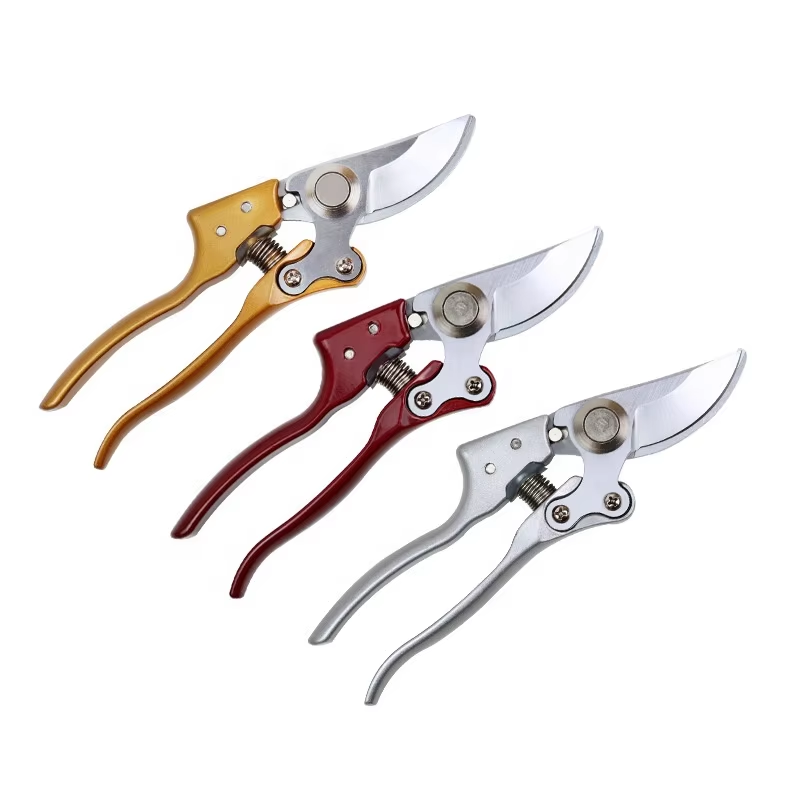
Metallurgical Science: Why High-Carbon Steel (e.g., SK5) Delivers Superior Edge Retention
Carbon content (0.7–1.05%) and hardness: The foundation of lasting sharpness in pruning shears
Pruning shears made from high carbon steel like SK5 hold their edge really well because of how the metal is treated during manufacturing. These tools typically have around 0.7 to 1.05 percent carbon content which allows them to reach hardness levels between HRC 58 and 62 after heat treatment. That kind of hardness makes all the difference when cutting through tough woody stems since the blades stay sharp much longer without getting bent out of shape after thousands of snips. What happens is the carbon creates tiny carbide particles throughout the steel matrix that fight off wear caused by rough plant material and sticky sap. Garden professionals know this matters a lot because it means they spend less time stopping to sharpen their tools and more time making clean accurate cuts that actually help plants recover better after pruning.
Martensitic microstructure: How controlled heat treatment enables precision cutting edges
What makes these tools so good at their job starts with how they form that special martensitic structure when processed at just the right temperatures. Heat it up to that magic spot and then cool it down fast, and something interesting happens inside the metal. The atoms rearrange themselves into this super tight, tetragonal shape that we call martensite. This particular structure gives the steel exactly what it needs to stay strong but still resist breaking when making those tiny cuts. After this initial treatment comes tempering which takes care of any built-up stress while keeping most of that hardness intact. That means the blades can hold those sharp 12 to 15 degree angles without dulling out too quickly. Look closely and the edge acts almost like thousands of tiny cutting points working together. Regular garden shears just don't cut it (literally) compared to these high carbon models. No wonder professional gardeners swear by them year after year when dealing with thick woody plants.
Edge Geometry & Performance: How High-Carbon Steel Enables Clean, Long-Lasting Cuts
Acute bevel compatibility (12°–15°): Sharpness without chipping in demanding pruning shears
The strength of high carbon steel comes from its hardness rating around HRC 58 to 62 plus those tiny grains called martensite. Because of this combination, it can maintain really sharp edges between 12 and 15 degrees without cracking or flaking off bits. Regular softer steels just bend or get squashed at such sharp angles. But high carbon steel focuses all that cutting power onto one super small spot, so it actually slices through plant material instead of just smashing it apart. This helps keep the plants' internal systems whole, speeds up healing after cuts, and reduces chances for diseases to sneak in. Even when running into tough knots or stringy parts of plants, the blade stays sharp and works cleanly for much longer periods compared to other materials.
Field-proven durability: 30% longer cut-life vs. medium-carbon alternatives (ISA 2023 arborist trials)
Field tests conducted by the International Society of Arboriculture back in 2023 showed that pruning tools made from high carbon steel stay sharp about 30 percent longer compared to those made from medium carbon steel before needing to be resharpened. When tested on twelve different types of trees under actual pruning conditions, arborists managed to make around 1,200 clean cuts between each sharpening session. This means fewer breaks for maintenance work on big projects. The reason these tools last so much longer has to do with their ability to resist wear better (as proven by standard ASTM G65 tests) plus they keep their cutting edge intact even when dealing with branches as thick as 2.5 centimeters. Beyond just saving time, this durability translates into real money savings over time since there's less need for frequent sharpening and replacement parts.
Balancing Performance and Practicality: Durability, Corrosion Resistance, and Maintenance
The maintenance imperative: Proactive care to preserve sharpness despite lower corrosion resistance
Pruning shears made from high carbon steel hold their edge better than almost anything else on the market. The downside? They don't resist rust as well as stainless steel options because they contain less chromium. But really, this isn't a problem so much as it is part of what makes them work so well. When making steel harder and more durable against wear, manufacturers have to cut back on certain metals that would otherwise help prevent rust. Taking care of these tools isn't rocket science though. Just wipe off any moisture after cutting plants, give the blades a quick rub with some mineral oil or even camellia oil before putting them away, and keep them out of damp places or sticky sap. Doing these basic things stops rust from forming while letting gardeners enjoy blades that stay razor sharp season after season. Many professional landscapers actually prefer this setup since sharp cuts matter more for plant health than having shears that never get rusty anyway.
Material Comparison: High-Carbon Steel Pruning Shears vs. Stainless Steel and Coated Alternatives
Hardness (HRC 58–62), Wear Resistance (ASTM G65), and Sharpening Frequency: Objective Performance Benchmarks
For serious pruning work, high carbon steel shears beat out stainless and coated options on several key performance factors that matter to professionals. These tools typically reach hardness levels around HRC 58 to 62 after proper heating and cooling processes, which puts them well ahead of most stainless steels that rarely hit above HRC 55. This makes a real difference when it comes to keeping a sharp edge over time. When put through abrasive wear tests similar to ASTM G65 standards, high carbon steel loses about 30% less material compared to standard stainless blades during repeated cutting tasks. Real world testing by ISA certified arborists last year backs this up showing that quality high carbon shears stay effective for roughly 50 hours of intense pruning before needing a touch up, whereas stainless versions usually need resharpening every 30 to 35 hours. Coated blades do provide some rust resistance, but those protective layers tend to break down quickly when subjected to friction and heat from constant cutting, leaving the base metal vulnerable and causing edges to dull faster in tough gardening conditions.
FAQ
Are high-carbon steel pruning shears better than stainless steel ones?
High-carbon steel shears generally offer superior edge retention and durability compared to stainless steel shears. However, they may require more maintenance to prevent rusting.
What is the ideal carbon content in high-carbon steel pruning shears?
The ideal carbon content in high-carbon steel pruning shears is typically between 0.7 and 1.05 percent, allowing for optimal hardness levels after heat treatment.
How often should high-carbon steel pruning shears be sharpened?
According to field tests, high-carbon steel pruning shears can last about 1,200 cuts before needing to be resharpened, significantly longer than medium-carbon steel alternatives.
What maintenance is required for high-carbon steel pruning shears?
Basic maintenance involves wiping off moisture, applying mineral or camellia oil, and storing the shears in a dry place to prevent rusting while preserving sharpness.
Table of Contents
- Metallurgical Science: Why High-Carbon Steel (e.g., SK5) Delivers Superior Edge Retention
- Edge Geometry & Performance: How High-Carbon Steel Enables Clean, Long-Lasting Cuts
- Balancing Performance and Practicality: Durability, Corrosion Resistance, and Maintenance
- Material Comparison: High-Carbon Steel Pruning Shears vs. Stainless Steel and Coated Alternatives
- FAQ